The Legend of Heroes

As I’ve mentioned in the past, usually the religions in video games inspired by Catholicism only resemble it superficially, copying the look and feel of the religion without any of the actual content that matters.  I honestly didn’t think I’d ever find anything better than a superficial but positive portrayal, but that changed last year when I started playing through the Legend of Heroes series. This JRPG series started in 2004 and is ongoing to this day.  The two main selling points of the series is the large, interconnected story in all the games of the series (the main plot is supposedly only 60% done) and the great world building enabled by NPC dialog that is constantly updated as you progress regardless of if it relevant to what you are doing.  Like most fantasy games it includes a fictional religion resembling Catholicism- the Septian Church. Unlike most games, however, it goes much deeper than a superficial resemblance. I wanted to spend some time talking about the Septian Church in this game and its similarities and differences to Catholicism.

To start off, I want to talk about the similarities between the Septian Church and Catholicism.  The world in the game is kind of loosely inspired by Europe in the mid 1800s, but with monsters and some new technology that is making things advance quickly to the present’s level of tech.  The various countries in the game are clearly inspired by those of the time, for example, Erebonia is basically Imperial Germany, Calvard is basically the French Republic and Liberl is basically Switzerland.  One country mentioned but not focused on in the game is Arteria- a city that is the center of the church (clearly a reference to the Vatican). Each city in the game has a church that resembles a Catholic church in terms of architecture as expected with an assigned priest (or bishop in the big cities) that runs it.  

A lot of the terms used by the church associated characters are Catholic instead of simply generic religious terms common in most games.  For example instead of “going to church” there is “going to Mass” and there are references to groups like the “Congregation for the Sacraments” back in Arteria.  The churches even have “Sunday School” where they teach the kids both religion and general knowledge in lieu of a modern school system. While all this would make it resemble the Catholic Church more than most games, it would still be superficial.  What really sells it for me is the dialog of the church affiliated characters. As I mentioned before, one of the big selling points of this series is that the NPC dialog is constantly updating as you play, often unrelated to the plot. As I was playing the game, the dialog of the church affiliated characters impressed me with just how Catholic it sounded.  One incident in particular that stood out to me in Trails in the Sky SC. Relatively late in the game, a town is attacked by the villains and the market that is the center of the town is completely destroyed- leaving the townspeople distraught and unsure of what to do. If you take a detour during this event and go talk to the town’s priest he’ll talk to you about suffering and the power of redemptive suffering.  I remember at the time thinking that the dialog sounded straight out of a Catholic homily on suffering. This kind of dialog is found all throughout the series and really makes the Catholic connections obvious.

While the Septian Church is clearly Catholic inspired, it’s still in a fictional world so there are some differences.  Probably the biggest is the Gralsritter- the church’s secret special ops team protecting the world behind the scenes. Because there are dangerous magical relics from the beginning of the world (for example, an item that stops time for everyone but its user or an item that turns whatever it touches into salt), the church established the Gralsritter to retrieve these relics and store them safely away where they can’t be used for evil.  Obviously since there isn’t anything similar to those relics in Catholicism, there is no need in the real world for such an organization. On top of that, at least one member of the Gralsritter is basically an assassin. While some of the people he kills in the game could arguably fall under the Catholic Church’s teaching on the death penalty, I can think of at least one that wouldn’t. Beyond the Gralsritter there are other small differences.  One is that the church is much less hard on animism- the game’s equivalent to paganism. People in the world are welcome to worship the wind for example, as long as they also worship the goddess of the Septian Church. This is in contrast to Catholicism, which clearly states that it is wrong to worship anything other than God (it doesn’t get more direct that the first commandment). Another small difference is the role of nuns in the church. In the Septian Church, the role of nuns is similar to that of permanent deacons- they kind of help out the priest in charge of the church, whereas in Catholicism nuns are parts of religious orders rather than directly tied to a local parish.  From what I understand, this difference comes from a cultural difference between Japan and the west. For whatever reason nuns are associated with old Shinto shrine maidens so even if a character is supposed to be more of a Catholic nun, their role will be more along that of the shrine maiden (while I’m not a huge fan of the site, TV Tropes does have an article explaining this common difference pretty well- https://tvtropes.org/pmwiki/pmwiki.php/Main/NunsAreMikos).  So while the Septian Church is significantly more Catholic than most fictional game religions, differences do exist.

Overall, I was extremely impressed with how religion was portrayed in the Legend of Heroes series and how close it was to real Catholicism.  It’s honestly really refreshing to see a church portrayed in such a positive light and relatively accurately in contrast to the negative, superficial portrayal much more common in games.  When I first played the games, I honestly thought these associations were made by some Catholic localizer in order to give some added realism to the church’s dialog, but it turns out I was wrong.  In an interview with the president of Falcom (the creators of the series), he revealed that the Septian Church was created to be a Japanese view of the Catholic Church- something mysterious and exotic but overall trying to do good in the world.  After reading that interview, I have to say they absolutely succeeded. While the series isn’t complete yet so there is still a chance for things to go south in the future, for now I extremely like what was done with religion in The Legend of Heroes.

Song of the Post-

Aster House

Trails in the Sky the 3rd
This was the most Catholic sounding song in the series I could think of

Castlevania

Probably the earliest games to have any kind of references to Catholicism were the Castlevania series.  Originally premiering on the NES with the game Castlevania, the series was a set of typical action platformers, but with a classic horror twist (so instead of fighting mushrooms/turtles and aliens, you were fighting bats and mummies and demons and, of course, vampires).  The basic plot for most games in the series is simple- some member of the Belmont clan of vampire hunters must fight his way through the titular castle and defeat the evil Dracula. While it has never been the main focus of the series, the Catholic Church has always been featured in the lore as the group organizing the fight against Dracula, usually by supporting the Belmonts or supplying other combatants while that family is missing.  I figured I could go through a few games in the series and discuss the role of the Catholic Church in each specific game (spoilers inbound for each!) Also note, this post won’t really go into Catholic theology at all, just the role of the church in various games.

Castlevania III- Dracula’s Curse

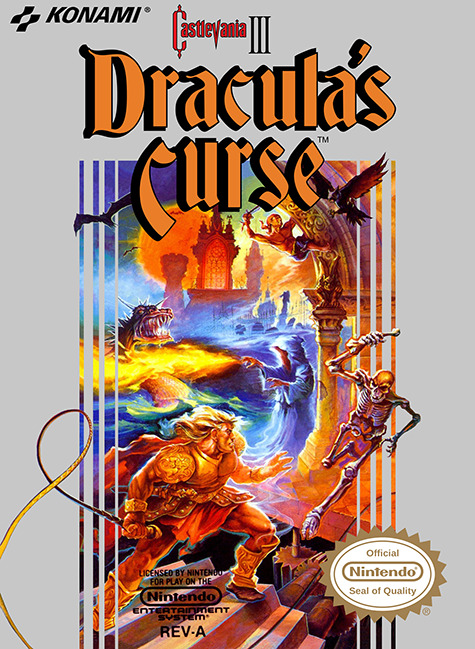
First up is Castelvania 3:  Dracula’s Curse for the NES.  The basic story of the game is that once again Dracula has shown up to wipe out humanity and this time it is up to Trevor Belmont to stop him.  Along the way he recruits the help of other people he meets including Dracula’s son Alucard, a pirate named Grant Dynasty and a magic user named Sypha Belandes.  Not a whole lot of Catholicism on the surface, but the connection is made clear in the lore within the instruction manual. Before Trevor Belmont, the Church sent soldiers to defeat Dracula themselves (as they mistrused the Belmonts) but failed.  After that failure, they finally agree to send Trevor and support him. In addition, Sypha Belandes is actually an agent of the Catholic Church. When she was a young girl she was being raised by evil witches, but after they were defeated she was taken in by some nuns.  Once she was older, she decided to use the magic from her childhood to fight for good. While these two references to Catholicism are pretty simple, it is a lot for an NES game as religion was typically removed from the western releases of games at the time.

Castlevania: Symphony of the Night

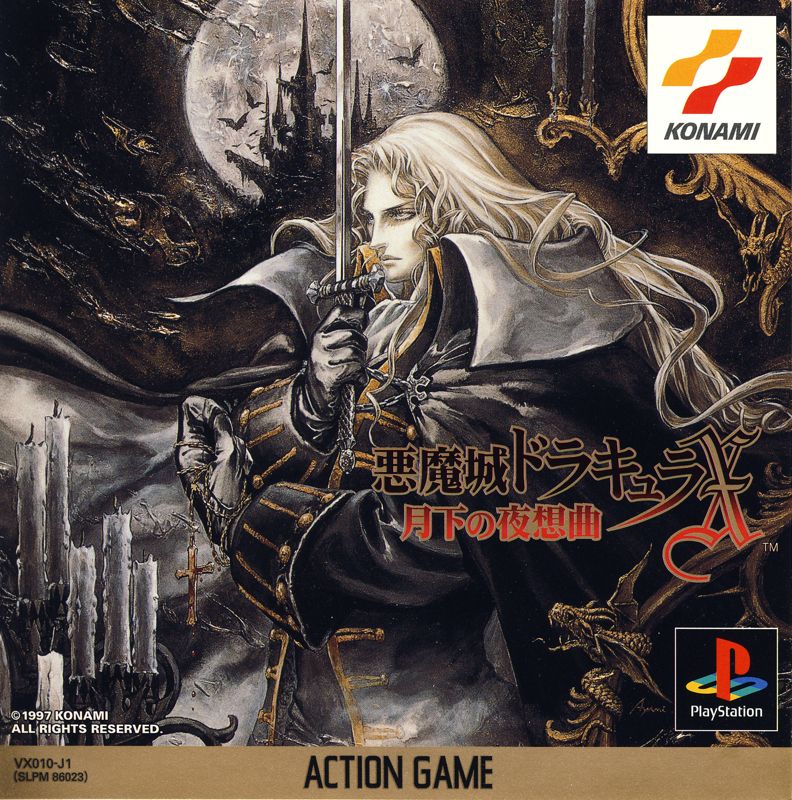
Next I want to talk about Symphony of the Night.  Released in 1997 on the PS1, it focuses on Alucard as he tries to figure out why Richter Belmont is trying to revive Dracula a year after defeating him.  This game is actually pretty light on the references to Catholicism, but I still wanted to mention the game because it will matter a little later.  Over the course of the game, you get a flashback to Alucard’s childhood where a mob burns his mother at the stake, believing her to be evil for marrying Dracula.  It’s important to note that it is a local mob that does the killing, not the church. While some superstition seems to have motivated the mob, there isn’t really any explicit connection to religion in this execution.  Other than that, there are a few visual references to Catholicism (such as the chapel area of the game) and some easter eggs (like a confessional for ghosts you can visit). Many people consider this one to be the best in the series, so while Catholicism may not come up much it still is worth playing.

Castlevania- Order of Ecclesia

Next I want to talk about 2008’s Order of Ecclesia for the DS, my personal favorite in the series and the game that most prominently features the Catholic Church.  The game takes place in the 1800s while the Belmont family is missing. Without the Belmonts to fight Dracula, the Catholic Church created the titular Order of Ecclesia to train fighters defeat him on when reappears.  The main character, Shanoa, is a nun raised by the order for this purpose (side note- one of the only good redesigns for the Castlevania Judgment fighting game was Shanoa’s which gave her more of a nun look than the original game did).  Over the course of the game, you come to discover that the leader of the order is just trying to use Shanoa to gain Dracula’s powers for himself, leading her to have to defeat both him and Dracula when the order is destroyed. One of my least favorite plot twists these days is the whole “good religious organization is actually evil,” but honestly it didn’t really bother me that much in this game.  I think the reason is that it’s not that Catholicism or even the order itself that is evil, but the leader who was using it for power. Still pretty cliche, but it didn’t bother me like it normally would.

Castlevania- Aria of Sorrow

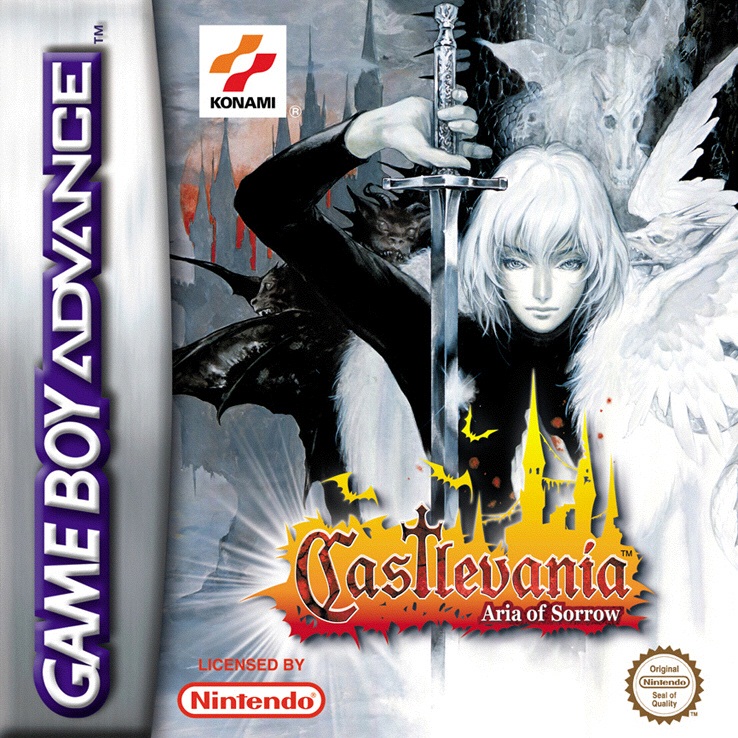
Next is 2003’s Aria of Sorrow for the GBA.  The game takes place in 2035 after Dracula was finally defeated for good in 1999.  It follows Soma Cruz as he is sucked into the castle during an eclipse and tries to find a way out.  Most of the heroic NPCs in the game are church agents sent to investigate why the castle has returned, including Yoko Belandes (a descendant of Sypha), Arikado (actually Alucard) and the mysterious J (actually Julius Belmont with memory loss).  After it turns out that Soma is actually the reincarnation of Dracula, it is the church characters that work to bring him under control and prevent him from giving in to evil and losing his mind (or if you get a bad ending, you can play a separate game mode mirroring Castlevania 3 where Julius, Yoko and Alucard have to fight Soma as Dracula).  While the Catholic Church isn’t mentioned much directly in this game, the characters associated with it are portrayed in a heroic light, in contrast to many other games out there.

Looking at these games, you can see a basic theme running across them.  The Catholic Church is the heroic organization preventing evil from wiping out humanity.  This role essentially the same as that of the Catholic Church in exorcism movies, the group that fights evil in the world (you don’t go to a Prodestant minister for an exorcism after all).  I imagine the reason for this connection in the game is because of the series’ ties to classic horror. If the game was just about random monsters, there wouldn’t really be any need to include religion and potentially risk alienating some of the audience (like in Zelda or Contra for example).  That said, I’m glad it worked out this way. Since so many games portray Catholicism (or its surrogate) in a negative light, it’s nice to have at least once game in our favor.

Castlevania Netflix

Lastly, I wanted to mention the Castlevania animated series on Netflix.  This show was a massive, MASSIVE disappointment to me that can be tied to the head writer, Warren Ellis.  Ellis is a pretty radical atheist which really shows in the various work he’s done in comic books. The big problem with the series is that Ellis took the plot of Castlevania 3 and changed what was unique about it (Catholicism good) into something super cliche (church bad, poor o’l Dracula misunderstood).  There are a few different examples. First, Alucard’s mom is explicitly killed by a church leader (eventually Bishop) for being thought a witch. This change was particularly obnoxious to me since it’s pretty ahistorical. The inquisition types were actually the original fair legal system, with most of the negative actions people attribute to them really belonging more to local powers.  On top of that, they can’t even use the excuse that they are trying to be more realistic because it takes place in the 1400s in Eastern Europe, which would need Eastern Orthodox characters involved rather than Catholic if you were going that route. Second, they changed Sypha’s backstory. Instead of being a magic use raised by nuns, she’s now more like a science gypsy that knows magic because her people ignored the church when they tried to suppress the knowledge.  This change was annoying both because it was a very explicit change to get rid of a positive Catholic character as well as because it’s preaching the modern, ahistorical idea that the Catholic Church was suppressing science and that humanity be way more advanced without them. Anyone who studies the history of Europe would know the modern sciences developed explicitly because of Catholicism, not in spite of it (it is no coincidence academic regalia makes professors look like priests and religious).  The funny thing is despite most of these changes, the show still kind of accidentally implies Catholicism is true, as holy water blessed by a priest is effective against the demons and more that one character seems to know for sure that God exists, so it doesn’t even really go full atheist in spite of Ellis’ best efforts. And lest you think I just don’t like it for making changes to the story, I will mention one real quick I like. They explain that the reason so much modern technology is in Castlevania is because Dracula is kind of a scientist and has developed it centuries in advance due to his immortality.  I like that idea since it’s a clever solution to why the castle has so many anachronisms and why Alucard’s mom would seek him out. Overall though, I dislike the Netflix series for taking one of the few series positive on Catholicism and turning it on its head in the most cliche way possible.

So barring the Netflix series, Castlevania probably has one of the most consistently positive portrayals of Catholicism in all of video games.  While it may not really go into the religious aspects of Catholicism at all, the fact that the church is acknowledged as a force for good is already a much better portrayal than other games.  It really is too bad that Konami has basically left video games, limiting the chance of future installments in the series. On the bright side however, the Bloodstained series by Koji Igarashi (who made many of the more popular Castlevania games) seems to be keeping the church in a positive, background role.  It’s nice to have at least one thing that isn’t trying to convince everyone that you were actually the true evil all along.

Song of the Post-

Bloody Tears

Castlevania:  Rondo of Blood

Pipe Organs somehow make Bloody Tears sound more Catholicy

Overview of Catholicism in Video Games

When an average person thinks of video games, religion is one of the last topics to come to mind.  Reasons include the fact that the kind of people who are religious tend to be older with a 1980s view of video games and the fact that religion is such a touchy subject people wouldn’t expect companies to risk alienating customers by including the topic.  That said, the Catholic Church itself is actually relatively common in games, although not always how you’d expect. It typically appears in one of two ways- either in a game with a historic setting featuring Medieval Europe (where you can’t avoid mentioning the church) or one in a fictional fantasy setting with a religion clearly inspired by the Catholic Church.  I figured as an introduction to the topic I could discuss these two ways Catholicism shows up in games.


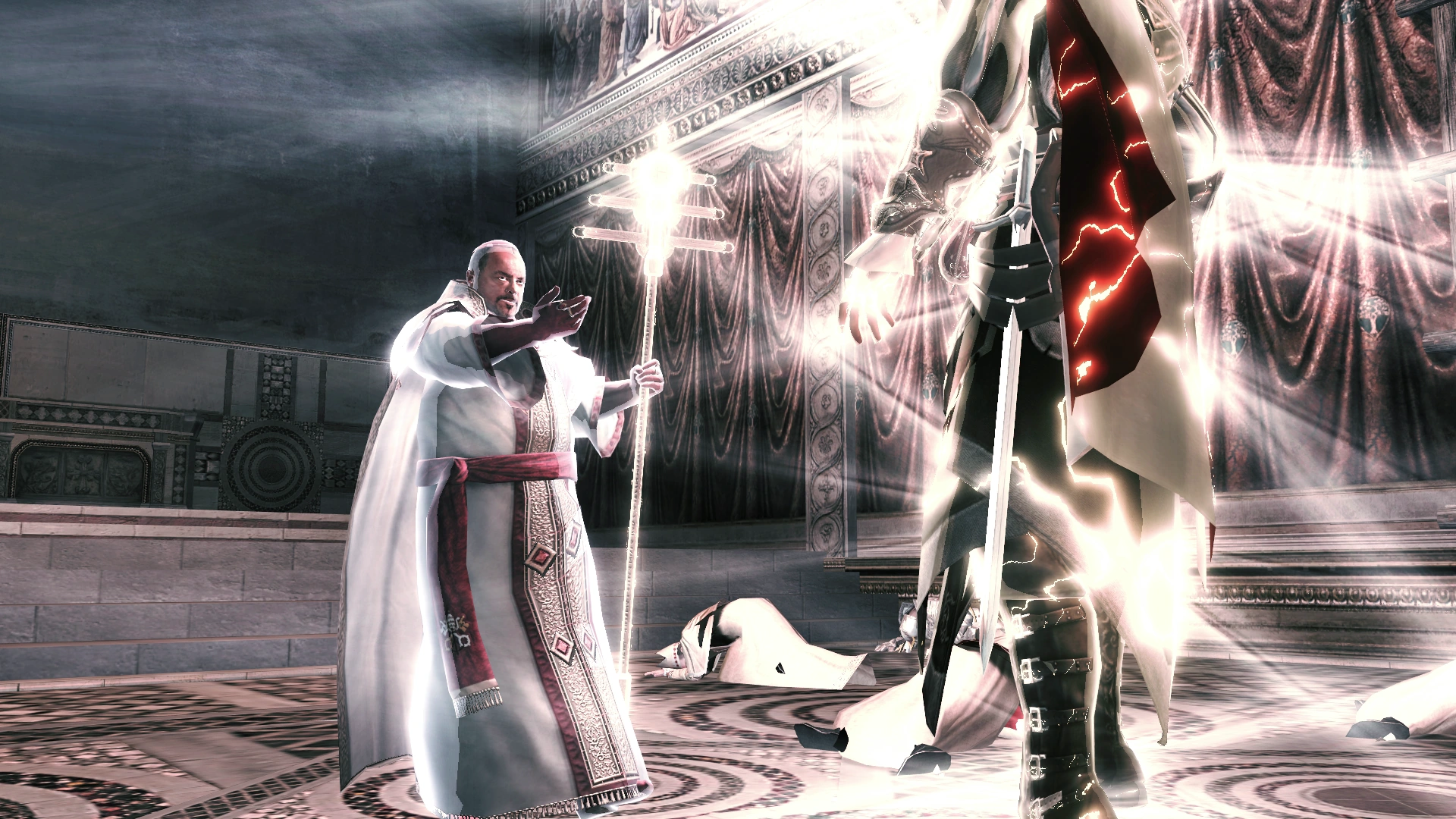
First, you have the less common of the two- a historical setting that can’t avoid the Catholic Church.  As surprising as it might be, games that take place in Europe before World War 2 are actually not that common.  When one does show up, however, the Catholic Church usually has some kind of presence in the game. The most common example of this type of game would be the various grand strategy games where you control some small of Europe and expand your control through battle and diplomacy.  In these games, Catholicism is typically present, but it is mainly abstracted into a tool of diplomacy. For example, in Civilization 4, all religions including Catholicism will give you a bonus to negotiating with civilizations of the same religion and a penalty to negotiate with those other religions.  In much less abstract example, the game Crusader Kings 2 will occasionally have the pope tell you to go on crusade whether you are actually interested in it or not (this isn’t quite how the crusades worked in real life but it is there to throw a wrench into your game plan). The other, much less common kind of historic game is a more story based game with a very concrete Medieval European setting.  The only two games I can think of like this are the Assassin’s Creed 2 games (which takes place in late 1400s Italy) and Kingdom Come: Deliverance (which takes place in Bohemia in 1403). In Assassin’s Creed 2, you spend a lot of time uncovering a conspiracy in the church, climaxing in a final boss fight with Pope Alexander VI in the secret Vatican Vaults.

Assassin’s Creed 2

The game is kind of a negative portrayal of Catholicism and implies that the only reason Catholicism exists around is because of ancient alien mind control technology controlled by the church (side note- it always amuses me when people decide that the religion which cares so deeply for free will uses mind control to assert dominance).  Kingdom Come, on the other hand, is trying much harder for a super realistic historic setting. As a result, most of the random people you encounter will have a clear concern for their faith as you’d expect from people living in 1400s Europe.

Kingdom Come: Deliverance

For example, sometimes if you try to do something violent or threatening in front of others, they’ll be shocked at someone acting so unChristian like.  It’s actually pretty cool to see a game take the religion of the people so seriously, even if there are other questionable aspects of the game (one quest involves convincing a priest to break the seal of the confessional so you can track down a criminal).  So overall, if you have a historic setting in Europe, you are likely to encounter Catholicism in some fashion.


Second, there is the much more common incorporation of Catholicism into video games- a fantasy game with a fictional religion clearly inspired by Catholicism.  This has become a staple of the RPG genre going all the way back to early video games with the Wizardry series (which inspired Dragon Quest and the JRPG subgenre), which in turn was inspired by the tabletop RPG Dungeons and Dragons.  The settings of these games tend to be essentially Medieval Europe but with magic and monsters, so it makes sense that some kind of religion is present. On top of that, Catholicism is a very visibly and audibly impressive religion that makes for cool set pieces like its massive churches with stained glass, its fancy vestments, its cool chanting music and its clerical hierarchy.  Writers typically take advantage of the fictional setting to get rid of any real world references to the religion and instead just keep the cool aesthetics as an inspiration for some new, fictional religion. This has two advantages to content creators- they can avoid upsetting people by discussing religion and they can work the religion into the plot without accidentally creating any inconsistencies.  The one big disadvantage however is that it is all too easy to turn this control into a super cliche plot twist- the church is secretly evil. In almost every game with a fictional church, at best the equivalent of the cardinals and the pope are super corrupt and at worst the entire religion is straight up evil. This has become such a cliche that people are actually shocked when a religion in a game ends up simply being what it claims to be.  Because games with fictional churches inspired by Catholicism are pretty common, I’ll just mention a few prominent examples. First, the granddaddy of JRPGs, Dragon Quest, uses the church as a revival place- if your characters die they can be brought back to life by the local priests.

Dragon Quest IV

Another example is Final Fantasy X, where the Yevon faith guides most of the characters you encounter and a few of the main cast (which naturally devastates them when they learn the “shocking” truth late in the game). On the more recent side of things, you have the modern Elder Scrolls games like Oblivion and Skyrim where the churches are mainly used for healing status ailments.  Finally there is the Septian Church in the Legend of Heroes series, which is the closest I’ve seen to real Catholicism in any fictional church in a game (I’ll probably write on that series specifically later). I could keep going, but honestly any fantasy RPG you can think of probably has some Catholic inspired religion in the game, showing just how common Catholicism is in games “from a certain point of view.”


So overall, Catholicism in video games is a lot more common than one might expect.  While it isn’t always directly present, you can see fictional religions drawing from Catholicism all over the place in games.  While much of this inspiration is pretty superficial, it makes for a good starting point for discussing Catholicism in games. I plan on using a lot of these games as the starting point for future discussions, so look forward to that down the line.


Song of the Post-

Baba Yetu

Civilization 4

Apparently “Our Father” in Swahili